Vladimir Mayakovsky
A Gentleman in MoscowVladimir Mayakovsky occupies the novel as a poet whose public revolutionary voice and private death become inseparable. His words continue to circulate after his suicide, sometimes detached from their source, while Mishka turns that death into a way of understanding both poetic silence and Russia’s repeated destruction of what it has made.
Identity and Early Promise
The novel identifies Mayakovsky as the poet laureate of the Revolution and recalls him delivering a poem while standing on a chair in 1923. The elevated, almost theatrical posture makes poetry a public act: the poet does not merely write for readers but takes possession of a room and commands attention. Mayakovsky’s later appearance in the story is measured against this forceful image, which makes the silence surrounding writers in the following years feel like a historical reversal rather than a natural fading of interest.
Mishka remembers having predicted in 1922 that Mayakovsky would join Mikhail Bulgakov, Anna Akhmatova, and Osip Mandelstam in forging a new poetry for Russia. The prediction had seemed improbable, yet Mishka believes the four did achieve something together. Their achievement, in his account, was not a flourishing body of new writing but a poetry formed under conditions that prevented such writing from being openly made.
Death and the Misattributed Verses
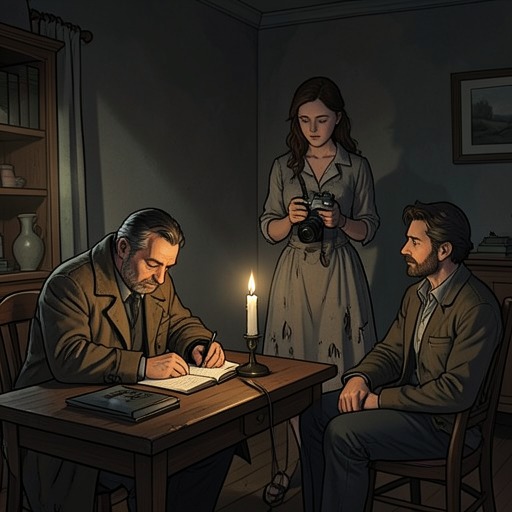
Mayakovsky’s suicide on April 14 changes the meaning of a passage the Count encounters in Mishka’s letter. The Count has been moved by what he takes to be Mishka’s verses about a romantic walk along Nevsky Prospekt and the day Katerina Litvinova first took Mishka’s hand. The narrative later reveals that the lines were not Mishka’s at all: they came from Mayakovsky’s poem, delivered in 1923. Mishka’s reason for citing them was Mayakovsky’s death, not the romantic memory the Count had supplied.
The letter itself never reaches the Count in a form he can finish reading. After he empties his pockets at half past three, the half-read letter falls into the gap between a bookcase and the wall, where it is left. The concealed explanation links a private fragment of correspondence to a public death, but keeps that connection from the Count. Mayakovsky’s words thus travel through another writer’s letter and are temporarily mistaken for the record of an intimate love story; their actual occasion is the loss of a poet.
The Poetry of Silence
For Mishka, Mayakovsky belongs to a generation of writers whose prospects have been narrowed or destroyed. Bulgakov is described as all but ruined and unable to write for years; Akhmatova has put down her pen; and Mandelstam, after serving a sentence, has apparently been arrested again. Mayakovsky’s death completes the bleak inventory. Mishka calls what these writers made together the poetry of silence: a poetic form with its own meter, tropes, and conventions, although it need not be written with pen or pencil.
This account makes silence more than the absence of published work. Mishka describes it as a possible opinion, a form of protest, and a means of survival, while also insisting that it can become a school of poetry. His image of writing in the soul with a revolver at the chest joins literary expression to mortal danger. Mayakovsky’s suicide is not simply evidence that poetry has been extinguished; in Mishka’s formulation, it becomes part of the terrible language through which poetry persists when ordinary writing is constrained.
The Dream and Russia’s Destructive Power
Mishka later tells Count Alexander Ilyich Rostov that Mayakovsky came to him in a dream. In the dream, Mayakovsky recites unfamiliar lines about birch bark glinting in winter sunlight, then loads his revolver with an exclamation point and puts it to his chest. The episode is explicitly presented as Mishka’s dream, not as an independently witnessed return. Its striking punctuation turns the revolver into both a weapon and a mark of expression: the gesture ends a life while giving the image the force of a final declaration.
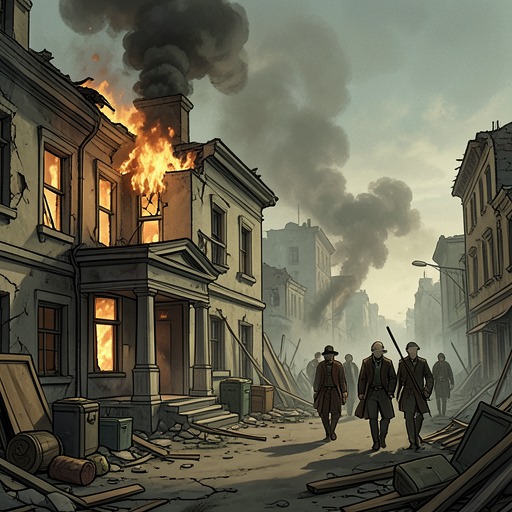
Mishka says that this dream altered his understanding of Russian self-destruction. He had been troubled by the apparent willingness of Russians to destroy their artworks, ravage their cities, and kill their own children. The dream leads him to reject shame or indifference as an explanation. He argues instead that such destruction comes from an intense belief in the power of the picture, the poem, the prayer, or the person. His warning that Moscow will not have been burned for the last time extends the argument beyond Mayakovsky’s death: the poet’s revolver becomes an image through which Mishka reads a national capacity to destroy its own creations, and the conviction that those creations matter profoundly.